Trading platform
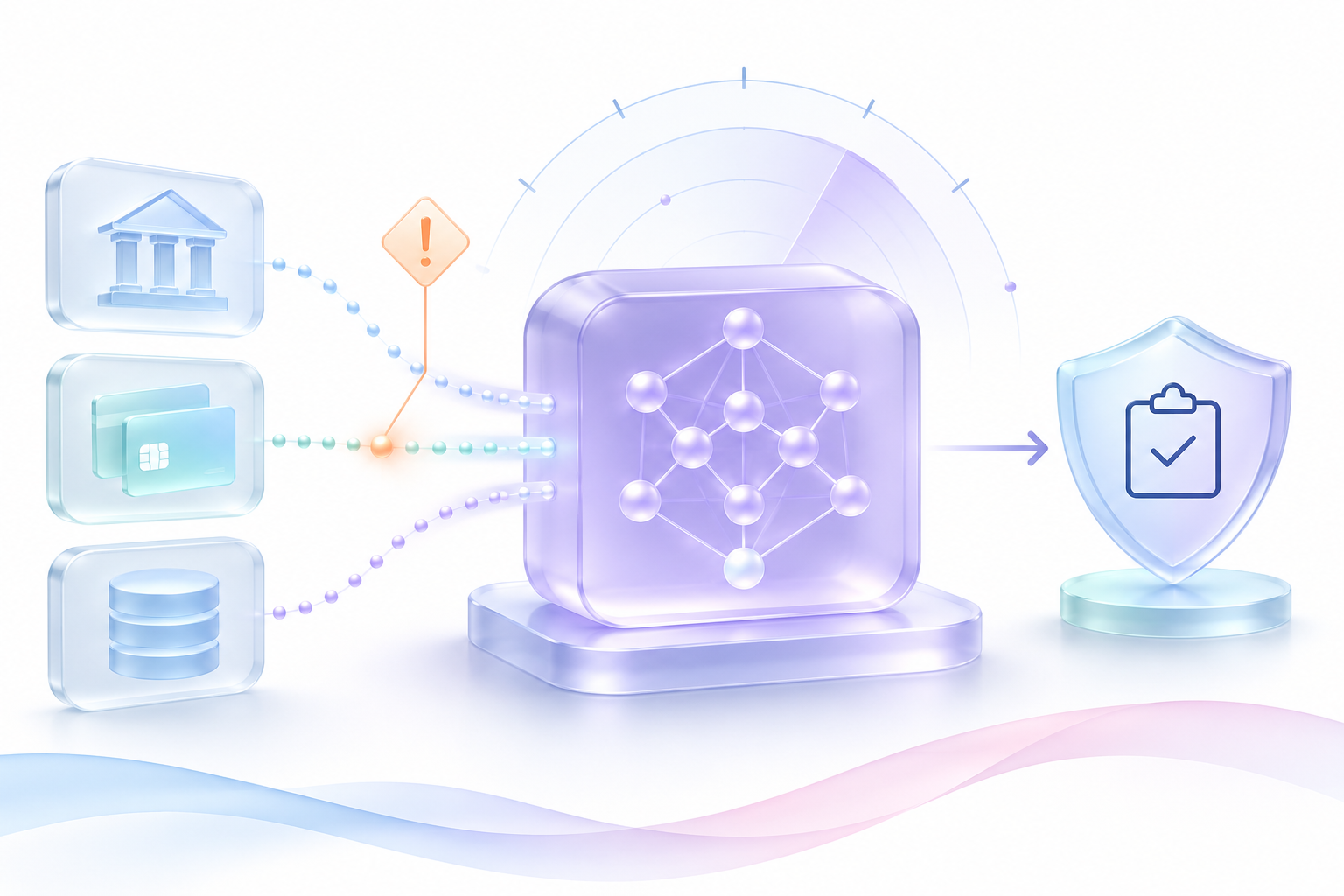
Market analysis, systematic strategy decisions and trade execution are connected within a framework of risk control and continuous monitoring.
 Institutional Enquiries
TECHNOLOGY
A modular engineering foundation for data processing, model evaluation and order execution, supported by security and operational visibility.
A SHARED FOUNDATION
Trading, accounting and payments have distinct responsibilities. Shared data integrity, controls and traceability connect their technical foundations.

Market analysis, systematic strategy decisions and trade execution are connected within a framework of risk control and continuous monitoring.
AI-assisted classification, reconciliation and reporting connect financial entries with their source records, supported by the private ledger and a traceable audit history.
Payment workflows combine controls, monitoring and reconciliation to support auditable movement of funds and a consistent record of transaction activity.
THE ARCHITECTURE AT A GLANCE
Four core systems.
One cross-system control layer.





Select a system to open its technical overview.

Coyna’s data engineering systems prepare incoming market information for consistent use across the platform. Validation, time alignment and normalisation help bring different inputs into a common representation before they reach downstream analytical components.
Data lineage preserves the relationship between a source and its processed form. This supports investigation of input changes and provides context when reviewing an analytical result or a system decision.
The engineering focus is on dependable information flow: maintaining identifiable inputs and defined processing responsibilities. Specific data sources, transformations and internal configurations are not disclosed in this overview.
The research environment provides a separate space for developing hypotheses, preparing features and evaluating models. Experiments begin with explicit assumptions and remain distinct from live execution, allowing research questions to be examined without directly introducing trading exposure.
Versioned experiments and documented configurations help make evaluations reproducible. Researchers can examine how a candidate behaves across relevant conditions and distinguish changes to the model from changes to the data or evaluation setup.
Evaluation, forward testing and bounded deployment contribute different evidence when assessing a candidate for production. Research findings remain subject to review; no single test guarantees future results.
The strategy and decision engine connects analytical outputs with defined strategy instructions. It gives the transition from a model’s interpretation to an intended action an identifiable place within the software architecture.
Documented parameters and versioned configurations keep the implemented decision logic traceable as the system evolves. Changes can be reviewed against the configuration that was previously evaluated, rather than treated as an informal extension of research.
The decision engine operates within the wider execution and control framework. Proprietary signal definitions, regime logic, strategy rules and parameter values remain private.

Order and execution infrastructure manages the transition from a strategy instruction to an order workflow. It maintains the relationship between an intended decision and the order activity that follows, while accounting for liquidity, trading costs and operational exceptions.
Order management, execution analysis and reconciliation provide complementary views of that lifecycle. Exception handling supports investigation when an order’s state or outcome differs from what the system expects.
Adapter-based connections provide interfaces to exchanges and brokers without making every strategy responsible for venue-specific integration. Connectivity details and operational settings are kept outside this public overview.

Risk and observability systems provide visibility across the platform rather than serving as a final step after execution. Operational observations, alerts and decision records help make exceptions available for review while trading activity continues.
Independent controls constrain activity within defined boundaries. Monitoring complements those controls by supporting escalation and intervention, while recorded context provides a basis for subsequent investigation and accountability.
The public architecture describes these responsibilities without exposing internal limits or intervention logic. The Risk & Governance page explains the broader oversight approach; controls do not eliminate market or operational risk.
SECURITY
Coyna combines AI-assisted monitoring with a private, permissioned blockchain to support the integrity of trading, accounting and payment activity.
Key decisions, orders and transactions are recorded on a private ledger accessible to authorised participants. Tamper-evident records support a verifiable history.
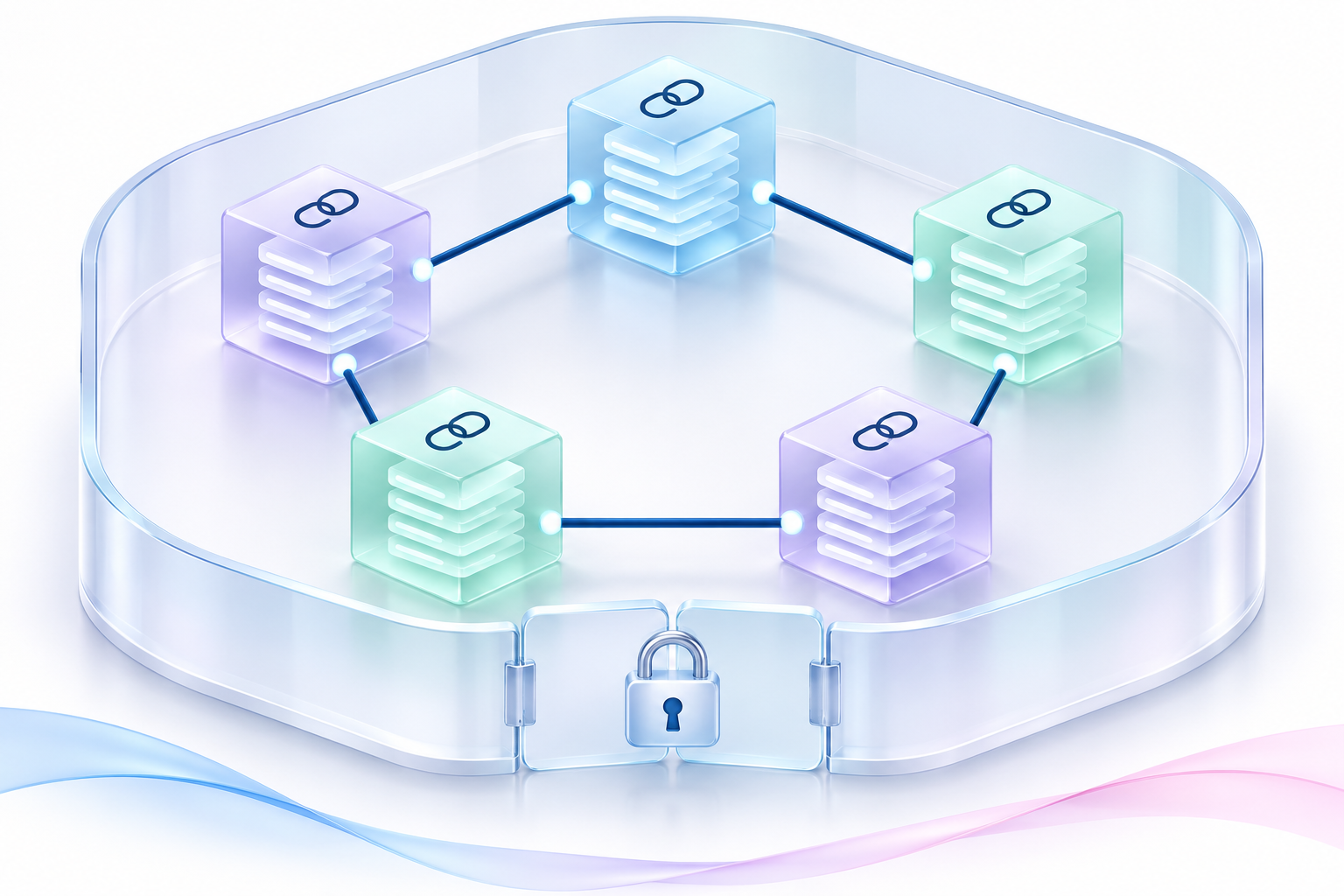
Models look for unusual activity across access, orders and payments, surfacing it for review and intervention.